Walk-Behind Floor Sweeping and Scrubbing for Tight Aisles
Walk-behind sweepers and scrubbers are compact machines guided by an operator on foot. They fit places where a ride-on cannot: narrow rack aisles, mezzanines, production cells, small plants and the corners of larger floors. They are also easier to bring into areas with a lot of stationary equipment or pedestrian traffic.
Describe the job and add your city. Free to request, no obligation.
The trade-off is speed. A walk-behind covers less floor per hour than a ride-on, so the best fit is smaller areas, tight layouts and detail work. Many facilities combine the two: a ride-on for the open floor and a walk-behind for aisles, edges and cluttered spots. The route should say which machine handles which zone.
Mixed-product areas, such as pick modules, mezzanines and food packaging rooms, benefit from machines that operators can steer close to equipment. Cord and battery choices matter too. Battery machines are quieter and cleaner for indoor use, while corded machines suit short, light runs. Describe the layout and the aisle widths in your request.
What the work includes
- A walkthrough noting aisle widths, obstacles, doors and power or charging access
- Walk-behind sweepers for dry debris and walk-behind scrubbers for film and stains
- Passes in tight rack aisles, between machines and along equipment
- Corner, edge and doorway cleaning that larger machines cannot reach
- Cleaning of mezzanines, platforms and small production rooms where floor loads allow
- Detergent chosen for the floor type and soil
- Wet floor signage and drying arrangements for scrubbing
- A visit note on areas that need hand work or equipment moved
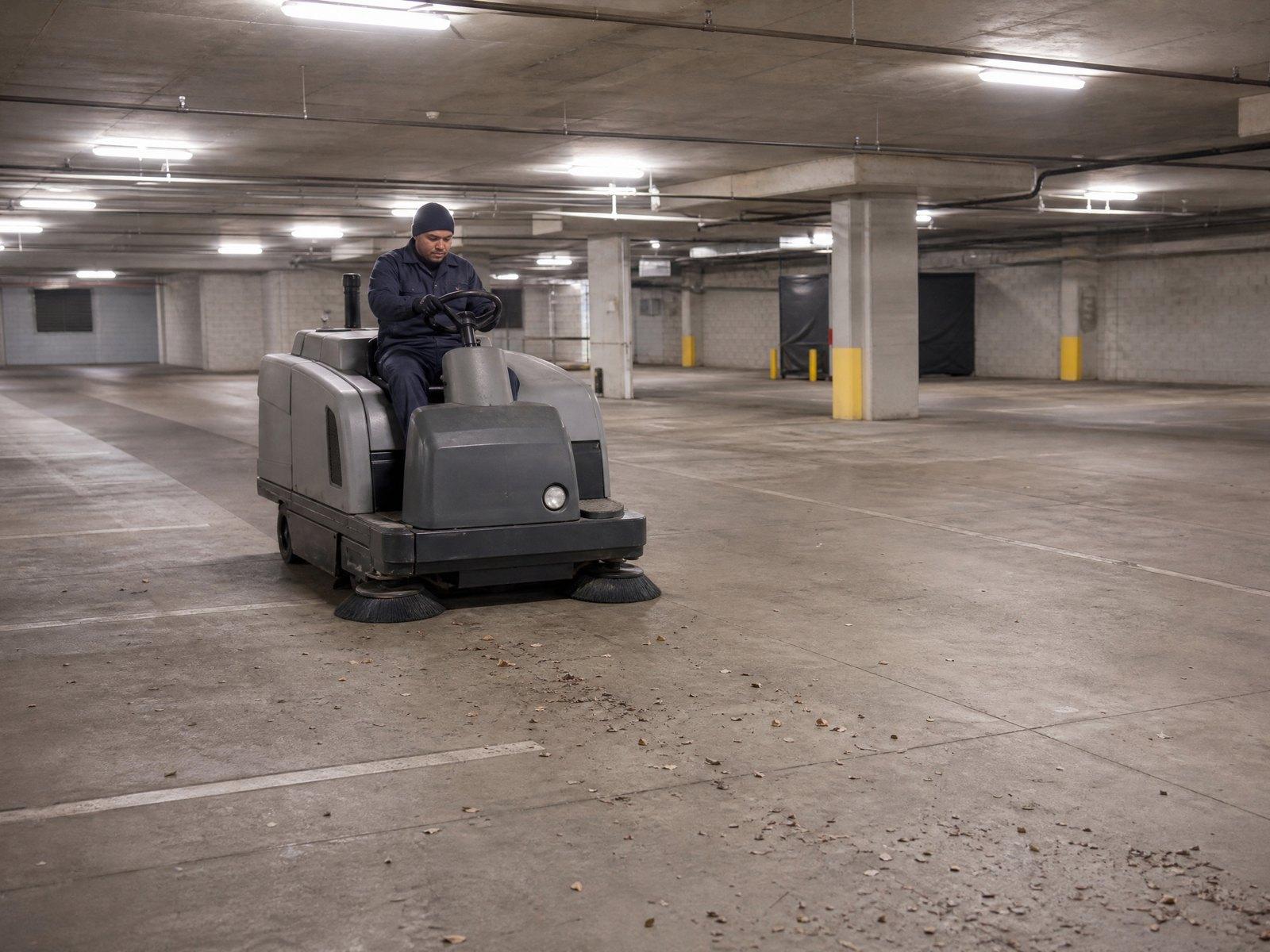
Signs a walk-behind is the right tool
Rack aisles too narrow for a ride-on machine
Small production rooms or cells with fixed equipment
A floor with many columns, dock levellers and corners
Mezzanines or raised platforms with weight limits
Areas around people where a smaller, quieter machine is preferred
A smaller facility where a ride-on is oversized
How the work goes, step by step
Share the layout
Provide a rough floor plan or photos, with aisle widths and the areas you want covered.
Walk the area
Obstacles, doors, drains and charging points are noted and a machine is selected.
Written scope
The scope lists zones, machine types, frequency, timing and exclusions.
Run the route
Operators sweep or scrub in a fixed pattern and report blocked or skipped zones.
Adjust
The route is refined when racking, product mix or aisle layout changes.
What changes the price
- Aisle length and count
- Many narrow aisles take more passes and turning, which adds time.
- Machine type
- Sweepers, scrubbers and combination units differ in cost and speed.
- Obstacles
- Racking uprights, pallets, cords and parked equipment slow the operator.
- Soil level
- Heavy residue needs slower passes or more than one pass.
- Access and power
- Distant charging points or lack of drains add setup time.
- Schedule
- Operating around production or in off-hours changes the labour cost.
What a good quote spells out
- Which zones get a walk-behind and which get a ride-on
- Machine width compared with your narrowest aisle
- Battery or corded power, and noise level if relevant
- What is expected of your staff, such as clearing pallets or moving carts
- How often the route runs and for how long
Walk-Behind Sweep & Scrub: questions people ask
When should a site choose a walk-behind over a ride-on?
Choose a walk-behind for narrow aisles, small areas and cluttered floors. A ride-on suits big open spaces. Many sites need both.
Can walk-behind machines clean rack aisles?
Yes, if the machine width fits the aisle with room to turn. Narrow-aisle layouts may need a compact machine and a tailored route.
Are walk-behind scrubbers quieter?
Often they are, especially battery models. Noise depends on the machine and the surface, so mention noise limits in the request.
Do walk-behinds pick up as much debris as ride-ons?
They pick up the same kinds of debris but have smaller hoppers and cover less floor per hour. Heavy debris is better handled by a larger machine first.
Other Broomline services
Need Real Industrial Sweeping? Let's Scope Your Floor.
Tell us about your facility in the quote form. A specialist who serves your area follows up to arrange a walkthrough and prepare a written route proposal. Free to request, no obligation.
Request a free quote →