Ride-On Industrial Floor Sweeping for Large Warehouse Floors
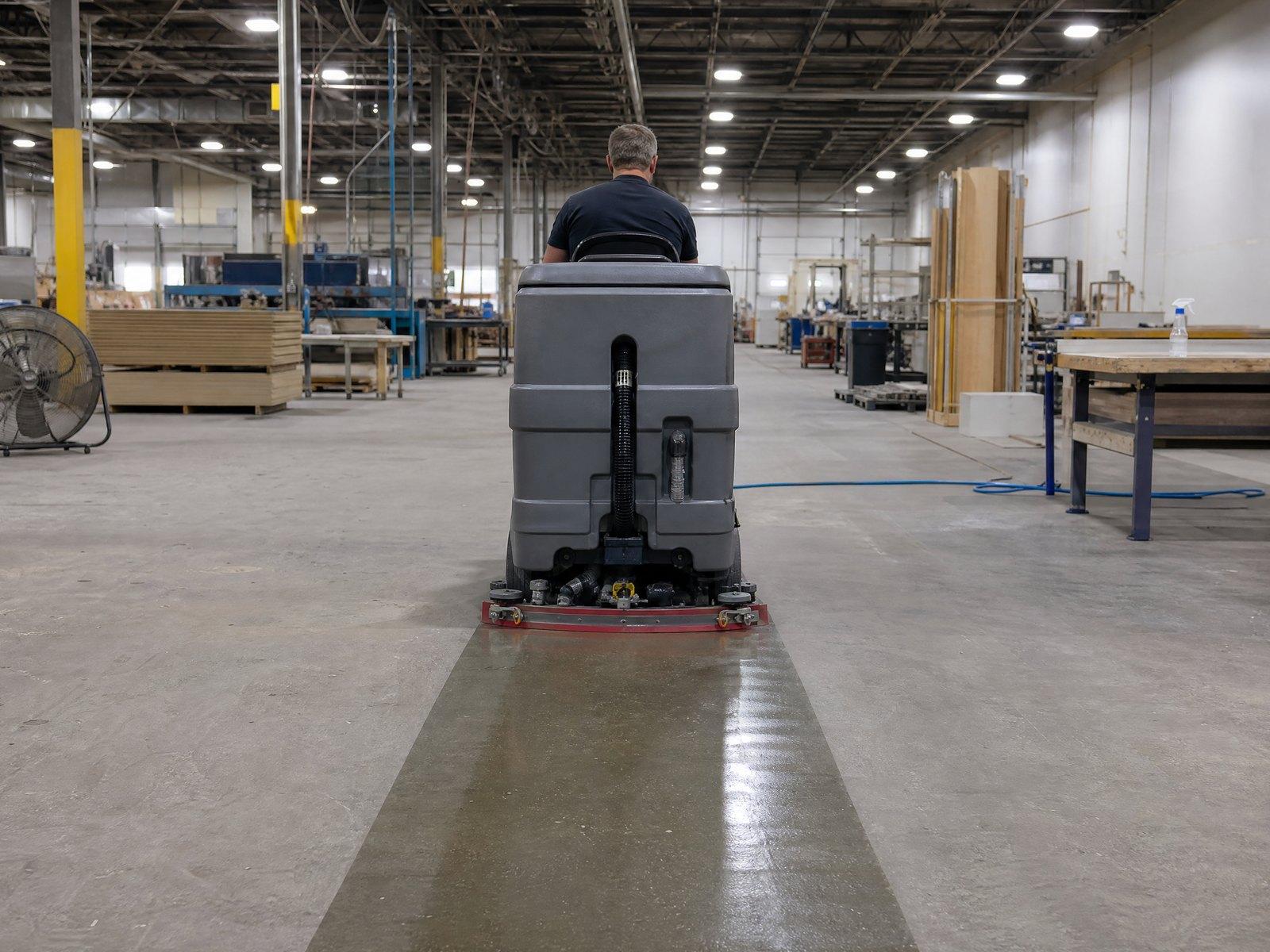
Ride-on industrial sweeping uses a seated or standing-operator machine with a rotating main broom, side brooms and a hopper to clear debris from large floors in a fraction of the time a push broom needs. It suits warehouses, distribution centers and plants where the floor runs to tens of thousands of square feet and aisles have to reopen quickly.
Describe the job and add your city. Free to request, no obligation.
The machine matters less than the plan around it. A sweeper that works against the flow of forklifts or skips the dock edges and rack ends leaves the debris that causes problems: shrink wrap around wheels, pallet splinters, nails, strapping and grit that wears a coating. A route written zone by zone, with the same pattern every visit, keeps results consistent.
Sweeping and scrubbing do different jobs. A sweeper removes loose material, and a scrubber removes film and stains. Many sites run both on a rotating schedule, with sweeping daily or weekly and scrubbing less often. Describing the debris you actually see in the form helps the proposal pick the right machine.
What the work includes
- A walkthrough of aisles, docks, rack ends, ramps and no-go zones
- Ride-on sweeper sized to the floor area and aisle widths
- Zone-by-zone route with a repeatable pattern each visit
- Edge and corner passes with side brooms along walls and racking
- Debris collected in the hopper and emptied to your waste point
- Dock plates, door thresholds and entrances included in the route
- Operators briefed on forklift lanes, pedestrian rules and site safety
- A short visit note on areas skipped, blocked or in need of follow-up
Signs a floor needs a ride-on sweeper
A push broom crew that never finishes the floor before the shift starts
Shrink wrap, strapping and pallet splinters collecting around forklift wheels
Grit and dust on the floor that wears coatings and rolls under tyres
Dust blowing onto stock, packaging lines or racking
Safety inspections flagging debris near exits, docks or aisles
Product spilled and ground into the floor by traffic
How the work goes, step by step
Describe the floor
Give the approximate area, surface, type of debris, how often you want service and your shift windows.
Walkthrough
The route, obstacles, dock edges, rack ends and storage points for the machine are walked and noted.
Written route scope
You receive a scope that lists zones, equipment, frequency, timing and what is left to your team.
Operator orientation
Operators learn your traffic rules, no-go zones and where to empty the hopper.
Run and review
The route runs on schedule, with notes after visits and adjustments as your layout changes.
What changes the price
- Floor area and layout
- Open floors are swept faster per square foot than racked, narrow-aisle layouts.
- Debris type and load
- Heavy grit, packaging waste and wood debris fill the hopper faster and slow the pass.
- Frequency
- More visits per week reduce the load per visit but add up over a month.
- Timing of the shift
- Night and weekend work to keep aisles open usually costs more than daytime sweeping.
- Obstacles and traffic
- Heavy forklift traffic, parked pallets and blocked aisles slow the route.
- Waste disposal
- On-site containers are simpler than hauling debris away.
What a good quote spells out
- The zones listed on a floor plan or sketch, with any exclusions marked
- Machine type and size for your aisle widths and floor area
- Frequency, start time and duration of each visit
- Where debris goes, and who handles it
- How blocked areas are noted and rescheduled
Ride-On Sweeping: questions people ask
How much faster is a ride-on sweeper than a push broom?
A ride-on machine covers many times more floor per hour and picks up fine dust and heavy debris in one pass. The exact gain depends on the layout, but large open floors see the biggest difference.
Can a ride-on sweeper work in narrow aisles?
Not usually. Ride-on machines suit wide aisles and open floors, and walk-behind units handle tight rack aisles and corners. Many routes use both.
Will sweeping stop dust from settling on stock?
A sweeper with a good filter and dust control picks up loose dust instead of pushing it around. Sites with heavy dust may also need cleaning above floor level, which is a separate task.
Does sweeping replace scrubbing?
No. Sweeping removes loose debris, and scrubbing removes oil film and sticky residue. Many sites sweep often and scrub on a longer cycle.
Other Broomline services
Need Real Industrial Sweeping? Let's Scope Your Floor.
Tell us about your facility in the quote form. A specialist who serves your area follows up to arrange a walkthrough and prepare a written route proposal. Free to request, no obligation.
Request a free quote →