Parking Garage Sweeping, Scrubbing and Deck Washing
Parking garage cleaning removes the grit, road salt, oil and debris that vehicles bring in and that concrete decks, ramps and drains collect. This page covers enclosed or multi-level garages, not open outdoor lots. Regular sweeping keeps floors looking cared for, and it protects the concrete and its drains from the abrasive, corrosive material that builds up over a season.
Describe the job and add your city. Free to request, no obligation.
Salt and water are the main threats to a deck. Winter de-icing salt carried in by vehicles sits in cracks and joints and attacks the concrete and its steel reinforcement over time. Sweeping and washing remove it before it can do more harm. Clogged drains mean standing water and ice patches, so drains and gutters belong in the scope.
Garages stay in use while they are cleaned, so traffic control and timing shape the work. Levels are usually closed in sections, with signs, cones and a spotter, and cleaning is often scheduled overnight or on quiet weekends. Washing also raises wastewater questions: oily or salty run-off cannot always go to the storm drain, and local rules apply.
What the work includes
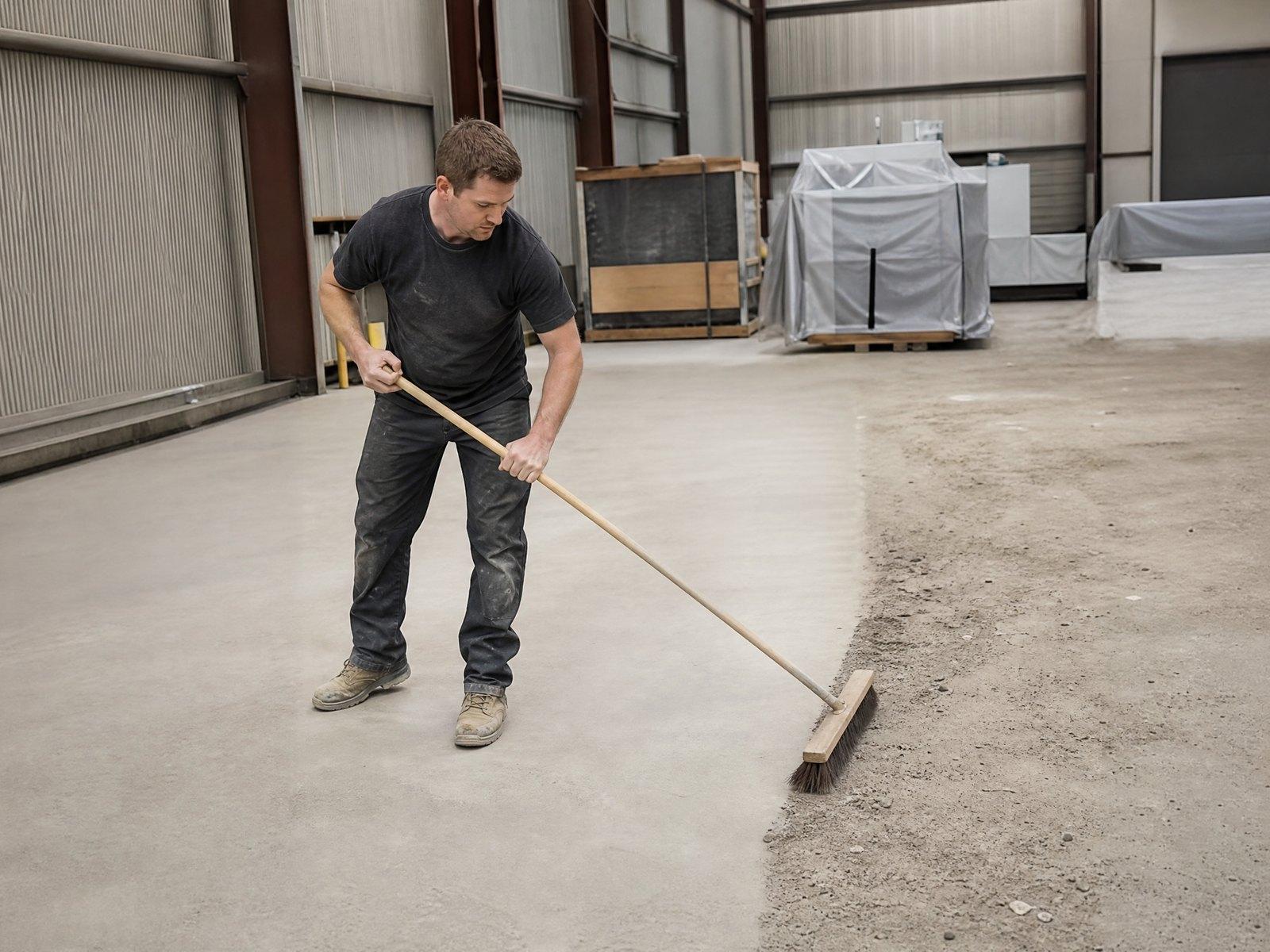
- Sweeping of parking decks, ramps, drive lanes and stair landings
- Detail passes along curbs, walls and column bases
- Cleaning around drains and clearing debris from trench drains and gutters
- Scrubbing or washing of oil stains and heavy soiling where agreed
- Spot treatment of oil drips in parking stalls with a degreaser
- Sign, cone and spotter set-up for traffic control
- Handling of collected debris and wash water as agreed with the property
- A report of damage, cracks or drainage problems noticed during cleaning
Signs a garage needs cleaning
A gritty, salty film on drive lanes after winter
Dark oil stains in stalls and stained concrete near ramps
Drains and gutters clogged with sand and litter
Dust and debris at stair landings and elevator lobbies
Standing water or ice patches near low points
Tenant complaints about dirt tracked into the building
How the work goes, step by step
Describe the garage
Give the number of levels, the approximate area, how much of it is covered, and the main issues you see.
Walkthrough
Ramps, drains, headroom, power, water access and traffic flow are reviewed.
Written plan
The scope lists levels, methods, frequency, traffic control and how wash water is handled.
Close and clean
Sections are closed in turn, swept and, where agreed, scrubbed or washed.
Reopen and report
Each section reopens after drying, and you receive notes on drainage and damage.
What changes the price
- Number of levels and area
- Large multi-level garages take more time and equipment moves than a single deck.
- Cleaning method
- Sweeping alone is cheaper than scrubbing or washing.
- Soil and salt load
- Winter salt, heavy oil and long gaps between cleanings need more time.
- Traffic control
- Closing sections, signage and attendants add labour.
- Wastewater handling
- Capturing and disposing of wash water adds equipment and cost.
- Schedule
- Overnight and weekend work typically costs more but avoids disrupting users.
What a good quote spells out
- Whether the plan covers sweeping only or also scrubbing and washing
- Traffic control and signage for each level
- How wash water and collected debris are handled under local rules
- Drain and gutter cleaning included or not
- How often the service runs and the season it focuses on
Parking Garage Cleaning: questions people ask
How often should a parking garage be swept?
Many garages are swept weekly to monthly, and more often in winter. Heavy traffic, retail and transit garages need tighter cycles.
Is power washing a garage allowed?
Rules differ by location. Run-off with oil or salt may not be allowed to enter a storm drain, so washing often needs capture or approved disposal. Ask your property team or the local authority.
Can garages be cleaned while open?
Yes, with section closures, signs and spotters. Levels are done one at a time, so the rest stays available.
Does cleaning prevent concrete damage?
It helps. Removing salt, grit and standing water reduces wear and corrosion, but cracks, joints and sealers also need periodic inspection.
Other Broomline services
Need Real Industrial Sweeping? Let's Scope Your Floor.
Tell us about your facility in the quote form. A specialist who serves your area follows up to arrange a walkthrough and prepare a written route proposal. Free to request, no obligation.
Request a free quote →