Ride-On Floor Scrubbing: Deep Cleaning Industrial Concrete
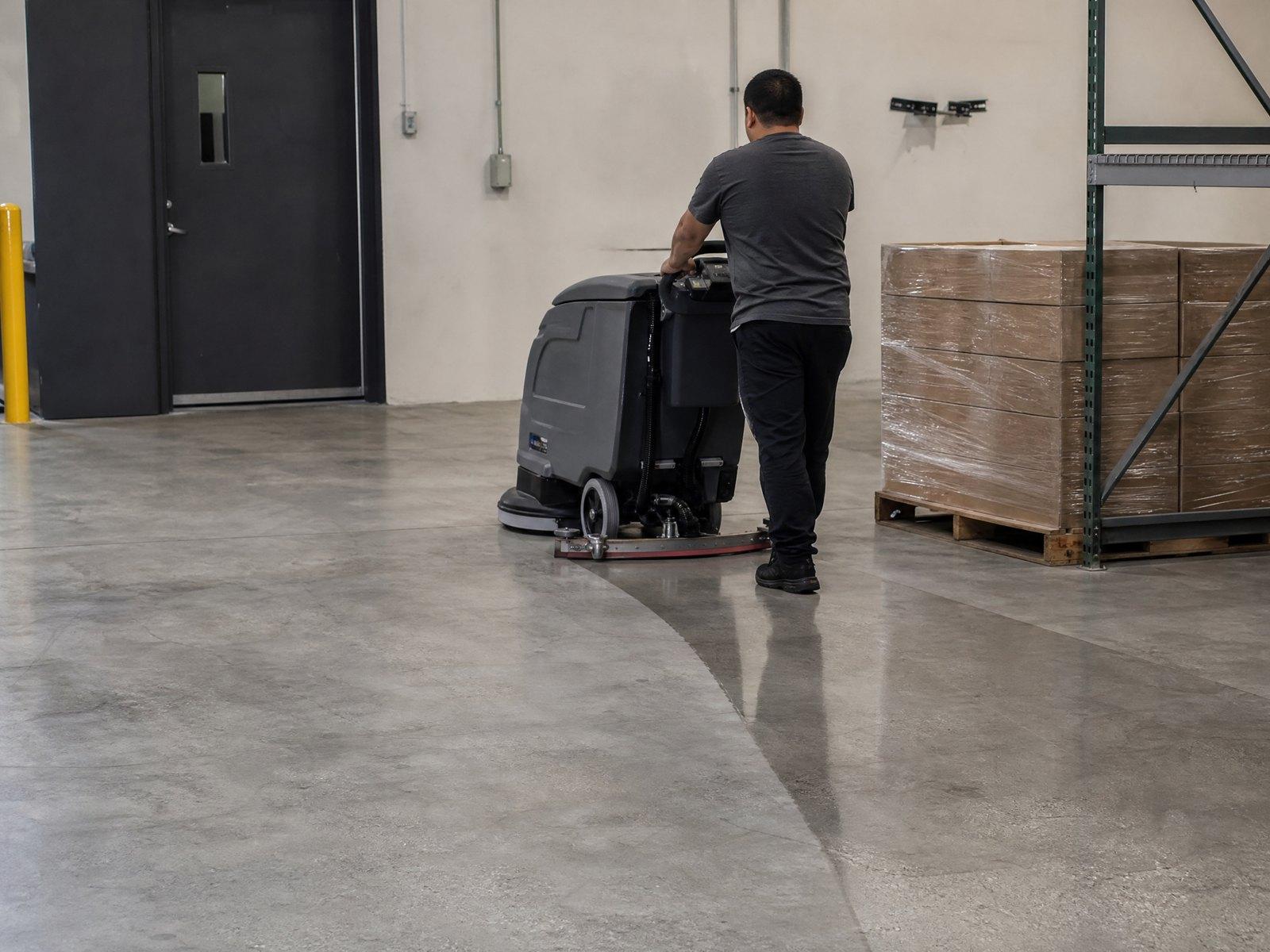
A ride-on floor scrubber applies a cleaning solution, brushes it into the floor, and picks the dirty water up in one pass, leaving the surface damp rather than wet. It removes the film that sweeping cannot: tyre marks, oil mist, food residue, dried spills and the grey layer that makes a bright floor look dull. For large plants and distribution centers it is the practical way to clean thousands of square feet in one shift.
Describe the job and add your city. Free to request, no obligation.
The right set-up depends on the soil and the floor. Raw concrete, sealed concrete and epoxy coatings take different brushes and cleaners, and aggressive brushes or the wrong chemical can wear a coating or leave residue that makes the floor slippery. In food and beverage areas, detergents have to suit the environment and the rinse needs to be thorough.
Scrubbing also leaves water behind, and wet floors and forklifts do not mix. A good plan covers drying time, signage, where the machine can charge or fill and how recovered water is disposed of. Describe any drains, slopes and sensitive areas in the form, so the scope accounts for them.
What the work includes
- Floor and soil assessment to choose brushes, pads and cleaning solution
- Pre-sweeping of heavy debris before the scrub pass
- Ride-on scrubber passes with solution application, agitation and recovery
- Detergent selection suited to oil, grease, food residue or general soil
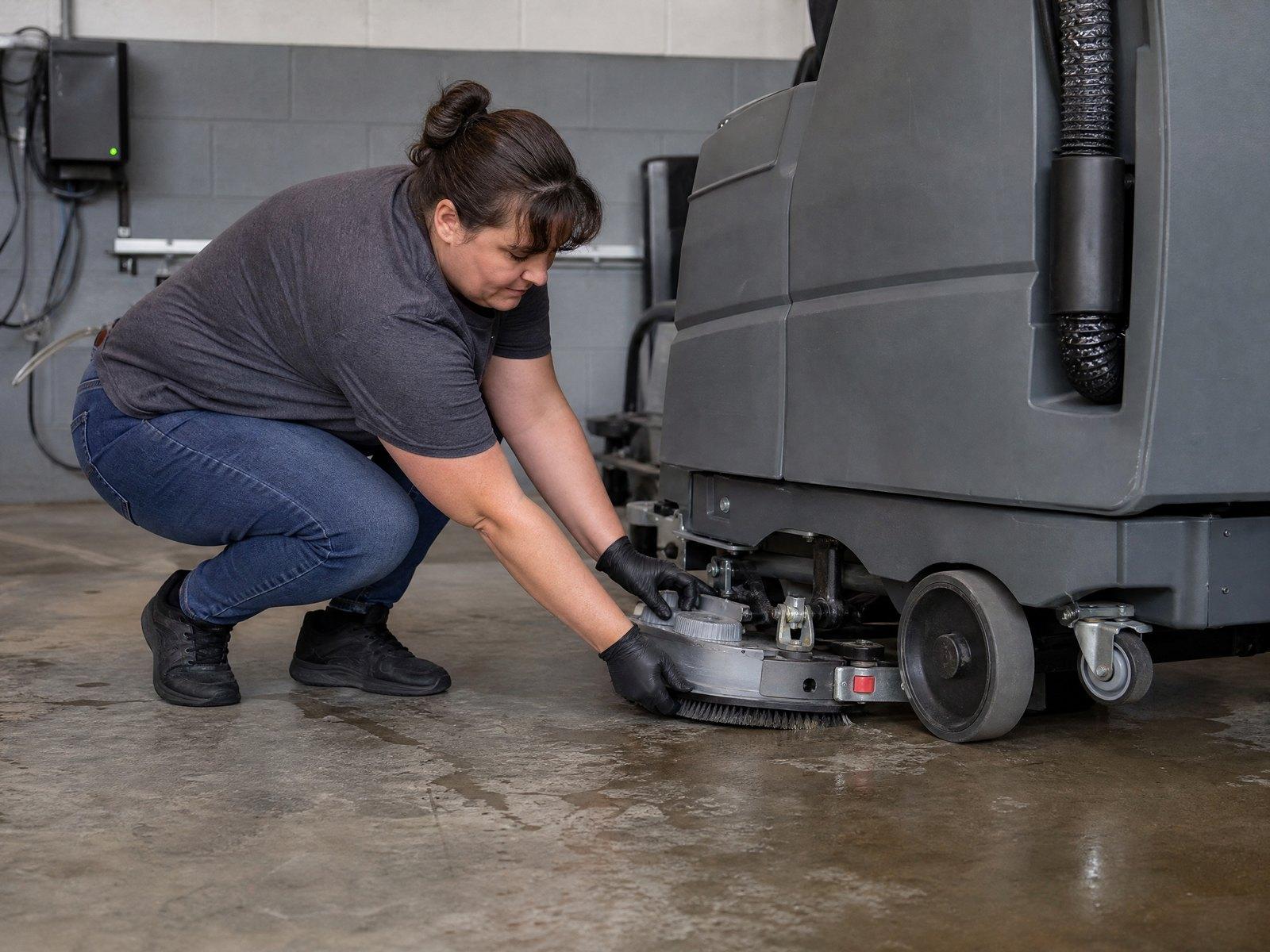
- Edge cleaning along walls, racks and column bases where the machine reaches
- Wet floor signage and barriers while the floor dries
- Handling of recovered dirty water as agreed with your site
- A visit summary noting problem spots, drains and areas needing hand work
When a floor needs scrubbing, not just sweeping
Floors that feel sticky, oily or slick under foot
Dark tyre tracks and dull grey patches that sweeping does not lift
Food, syrup or product residue baked onto a production floor
Dust and grime ground into sealed concrete or epoxy
A pending audit or inspection that needs visibly clean floors
Forklift wheels slipping or leaving black marks
How the work goes, step by step
Tell us about the floor
Describe the surface, soil, area, drains and any food or chemical considerations.
Test and walkthrough
A test area may be cleaned to choose the brush and solution, and traffic and drying needs are planned.
Written scope
You receive zones, equipment, chemicals, frequency, timing and drying arrangements in writing.
Pre-sweep and scrub
Loose debris is swept first, then the scrub route is run in a set pattern.
Dry and review
The floor is checked for streaks and slip risk before traffic is restored.
What changes the price
- Floor area
- Larger open floors are cleaner per square foot because setup is shared.
- Soil level
- Heavy oil, grease and built-up film need slower passes, stronger cleaner or repeat passes.
- Surface type
- Sealed concrete, epoxy and raw concrete need different brushes and solutions.
- Water and drainage
- Poor drainage or no floor drains make recovery slower and may limit when the work can run.
- Shift and drying time
- Scrubbing between shifts needs planned drying time before traffic returns.
- Frequency
- Regular scrubbing keeps soil light, and each visit is easier than a catch-up clean.
What a good quote spells out
- Cleaning chemical named, with its suitability for your floor and any food-safe requirement
- How drying time is managed and communicated to your floor staff
- How recovered water is handled and where it is disposed of
- Whether the route includes a pre-sweep
- How much of the edge work is done by hand versus machine
Ride-On Scrubbing: questions people ask
How often should a warehouse floor be scrubbed?
It depends on traffic and soil. Many sites scrub weekly to monthly, and food or pharma areas more often. A walkthrough helps set the right cycle.
Can a scrubber damage an epoxy floor?
The wrong brush or a harsh chemical can dull a coating. A suitable pad and a compatible cleaner are chosen for coated floors and tested on a small area first.
How long until the floor is dry?
A scrubber leaves a floor damp, and it usually dries within minutes to an hour depending on ventilation and temperature. Plan signage and a gap before forklifts return.
Does scrubbing remove oil stains?
It removes surface oil and film. Deep stains in porous concrete may need degreasers, poultices or resurfacing, and are not always fully removable.
Other Broomline services
Need Real Industrial Sweeping? Let's Scope Your Floor.
Tell us about your facility in the quote form. A specialist who serves your area follows up to arrange a walkthrough and prepare a written route proposal. Free to request, no obligation.
Request a free quote →